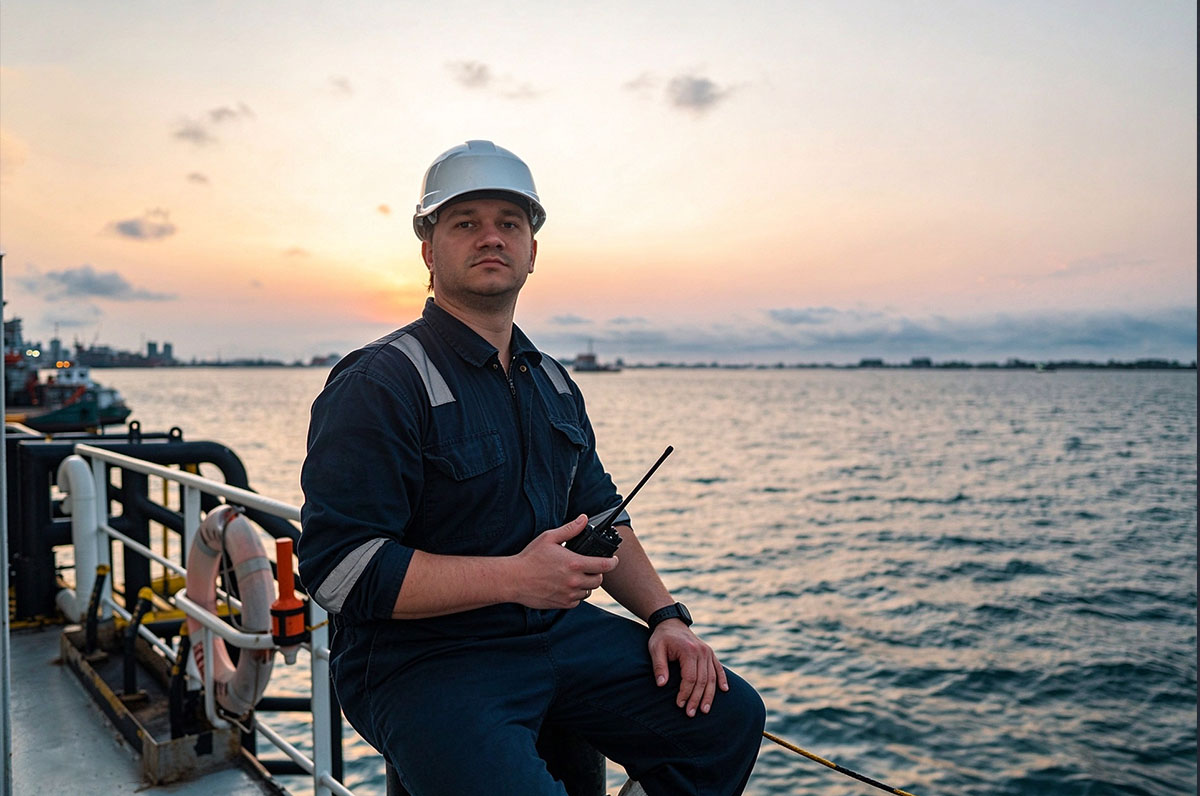
The marine environment is full of uncertainties. Situations like waves, dense fog, and being far offshore can completely disable regular mobile communications. Unlike land-based walkie-talkies, maritime VHF radios are designed according to international maritime communication standards. They are built for high humidity, salty fog, and rough conditions at sea, making them the recognized and universally used basic communication tools in the maritime field. Whether it’s an ocean-going cargo ship, a nearshore fishing vessel, a leisure yacht, or an offshore construction platform, equipping stable and reliable maritime VHF equipment is not only a regulatory requirement but also a key choice for ensuring the safety of crew and property at sea.
1. Following International Maritime Communication Standards: Channel 16 is the global distress monitoring channel
In the channel system of maritime VHF, Channel 16 (156.800 MHz) is the internationally recognized distress and safety call channel, something every sailor must remember. During navigation, all vessels need to keep Channel 16 monitored. If a vessel encounters collision, flooding, fire, or a man-overboard situation, it should first send a voice distress call on Channel 16. Nearby vessels and shore stations monitoring it can immediately receive the signal and coordinate rescue operations.
Key point: Channel 16 is only for distress alerts and initial calls. Once the call is established, operators must switch to the designated working channel for ongoing communication. Long conversations on the distress channel are strictly prohibited to avoid blocking life-saving communication. Additionally, Channel 70 is reserved for DSC digital calls and supports only digital message transmission, not voice calls. Ports, pilots, tugs, and offshore operations also have dedicated operational channels that vessels must switch to when entering ports, docking, or conducting offshore work to ensure smooth dispatch of orders.
2. DSC Digital Selective Calling: Intelligent distress alerts with location info
Modern professional maritime VHF radios come standard with DSC (Digital Selective Calling), which is a major feature distinguishing them from basic marine communication devices. Before use, vessels must apply for a compliant nine-digit MMSI maritime identification number and register it. This number acts as the vessel's unique communication ID at sea and integrates with AIS and emergency position indicator information. It cannot be arbitrarily assigned.
In a maritime emergency, the crew only needs to press the red DISTRESS button on the device (with a protective cover). The radio will automatically package a distress message containing the vessel’s MMSI, GPS coordinates, type of emergency, and subsequent communication channels, sending the alert to nearby DSC-monitored vessels and shore stations. Compared to traditional voice calls, DSC alerts don’t rely on continuous manual shouting. Even if there’s no one in the wheelhouse actively listening, receiving equipment will alert with sound and light, greatly increasing the chance of timely detection. This compensates for the shortfall of traditional marine communication, where you can’t clearly indicate the location or maintain continuous calls in an emergency.
3. Strict Marine Hardware Standards to Withstand Salt Spray and Harsh Conditions at Sea
The high salt spray, splashing waves, heavy rain, and temperature fluctuations at sea impose very high requirements on the reliability of communication equipment. Marine VHF radios are fundamentally different from land-based models in terms of hardware.
1. Waterproof Protection Rating: Standard marine models should at least reach the IPX7 waterproof rating, supporting short-term immersion without malfunction. High-end models can achieve IPX8, capable of withstanding prolonged deep-water immersion, suitable for extreme situations like lifeboat drops. The body structure is sealed and treated to resist salt spray, preventing seawater corrosion of the circuit board and metal contacts, extending the equipment's service life at sea.
2. Transmit Power Levels: Fixed desktop marine VHFs are usually high-power 25W units, offering longer line-of-sight communication. Handheld marine VHFs are mostly 5–6W, with 25W/1W power switching capability. Use 1W low power for short-distance port operations to reduce frequency interference; switch to high power for offshore calls to ensure communication distance. Since VHF is line-of-sight communication, antenna installation height often affects communication range more than the model's rated power.
3. Battery Life and Power Solutions: Professional models support dual power modes, relying on shipboard power for continuous operation, while handheld units come with high-capacity dedicated lithium batteries and backup options. Battery performance under low temperatures is manageable, meeting the needs for long offshore voyages and emergency use.
Mainstream models also feature dual-watch/triple-watch functions, keeping an eye on 16 emergency channels while operating on business channels, so routine communication won’t miss any distress calls. Channel scanning allows monitoring multiple common channels, ideal for busy ports and multi-ship operations, balancing communication efficiency and safety. High-end models may integrate an AIS receiver module, displaying nearby ships' heading, speed, and name on the screen, helping avoid collisions in fog or at night.
4. Clarify Compliance Boundaries: Don’t Replace Marine VHF with Land Radios
Many boat owners fall into the trap of buying ordinary land radios instead of marine VHF equipment, which poses serious safety and compliance risks. Land radios lack marine certification, don’t follow marine frequency regulations, have no DSC distress message functionality, and aren’t designed with water- and salt-resistant structures. They cannot access the global maritime distress monitoring network, so distress signals may go unrecognized in an emergency.
According to domestic maritime regulations and the GMDSS system, vessels must be equipped with approved marine VHF terminals based on tonnage and navigation waters. Operators must be certified and use marine channels correctly. During inspections, any missing equipment, non-compliant models, or unregistered MMSI numbers will require rectification. Compliance and usability of communication equipment are also key points in accident reviews and insurance claims.
5. Versatile Marine Scene Adaptation, Meeting All Water Communication Needs
Marine VHF radios cover all types of water operations: For ocean-going commercial ships on long voyages, they rely on VHF to communicate with shoreline traffic management and passing ships; for nearshore fishing fleets, unified channel scheduling helps avoid collisions in fishing zones; offshore wind power and dredging vessels use VHF for operational commands; yachts, recreational boats, and rescue lifeboats rely on handheld marine VHF as personal emergency communication gear.
Even with the growing use of satellite communication and BeiDou systems, marine VHF remains irreplaceable. Satellite communication is expensive and suffers from connection delays, while VHF allows one-touch calls, broadcast calls, and ensures all vessels across the sea can listen in, making it the essential communication method during distress and rescue scenarios. With multiple communication methods as backups, VHF is always the foundation of maritime safety communication.
Safety is the first and forever rule of seafaring. A marine VHF radio is more than a simple calling device—it’s an emergency communication terminal integrated into the global maritime safety system. Its stable signal, standardized distress protocols, and hardware that withstands ocean corrosion help protect countless vessels and crew on their journeys at sea.