問い合わせ
blog
ブログ
Prolonging the Service Life of Two-Way Radios: 6 Core Principles and 7 Advanced Practices May 25, 2026

Two-way radios remain essential communication tools across security, construction, hospitality, event management, and outdoor recreation. While modern handsets are engineered for durability, their real-world longevity depends heavily on how they are maintained. A comprehensive maintenance strategy extends beyond basic battery care and periodic cleaning. This article outlines six foundational principles and seven often-overlooked practices that, when combined, form a robust protocol for keeping your radio fleet operational for years.


The Six Core Principles

1. Battery Management

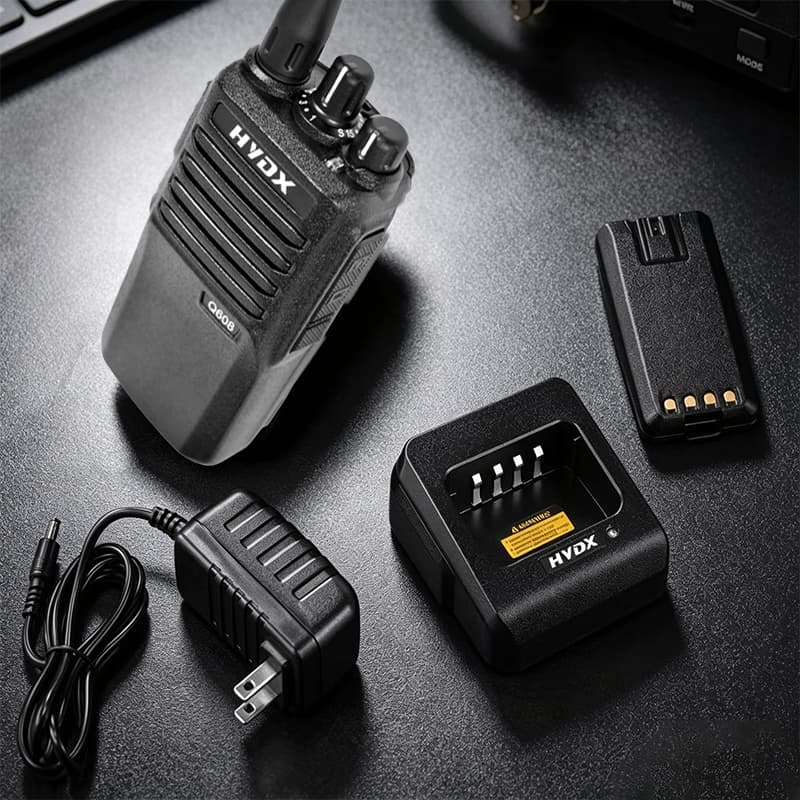
The battery is the lifeblood of any portable radio. Lithium-ion packs should not be fully discharged on a routine basis; recharge them once they reach approximately 20 percent capacity. For long-term storage, maintain a charge level between 40 and 60 percent. Always use manufacturer-approved chargers, as mismatched charging profiles accelerate cell degradation. Clean battery contacts regularly with a dry cloth to prevent resistance buildup and erratic charging behavior.

Always use the original manufacturer-approved charger or an explicitly compatible, high-quality substitute. Genuine chargers are engineered to deliver the precise voltage and current profile required by the battery's internal management circuitry. They implement proper constant-current/constant-voltage (CC/CV) charging algorithms and include safeguards such as overcharge protection, temperature monitoring, and automatic shutoff. Using a cheap, third-party charger that lacks these protections can cause erratic charging, overheat the battery, accelerate cell imbalance, and in extreme cases trigger thermal runaway or cell swelling. Inconsistent charging also introduces resistance buildup at the contacts, leading to inaccurate fuel gauge readings and reduced usable capacity over time. Clean battery contacts and charger terminals regularly with a dry cloth to prevent resistance buildup and ensure a reliable charge cycle every time.

2. Proper Operational Use

Adhere to the manufacturer's operational guidelines. Transmit only when necessary and avoid excessive modulation, which places unnecessary stress on audio circuitry and increases power consumption. Respect the radio's duty cycle ratings — typically 5-5-90 or 10-10-80 (transmit-receive-standby) — to prevent thermal stress on the final amplifier stage. Therefore, actually good usage habits can extend the service life of a radio.

3. Environmental Protection

Even ruggedized radios rated to IP67 or MIL-STD-810 standards benefit from cautious handling. Minimize direct exposure to intense sunlight, heavy rain, and fine dust. When transitioning between extreme temperatures, allow the unit to acclimate gradually inside a sealed bag to avoid internal condensation, which can corrode circuit boards and degrade connectors over time. Sunlight may age the rubber on the keys, and dust and sand can reduce the sensitivity of the buttons. So, it's necessary to protect the radio body with a bag or certain protection.

4. Regular Cleaning

External surfaces, control knobs, and speaker grilles should be wiped down with a slightly damp microfiber cloth after heavy use. Avoid chemical solvents that can attack plastics, rubber seals, and screen coatings. Particular attention should be paid to charging and accessory contacts — even a thin layer of dirt or oxidation can introduce resistance, causing intermittent charging and unreliable data communication.

5. Intelligent Storage

When radios are taken out of active service, remove the battery and store the unit in a cool, dry environment. Silica gel desiccant packets placed inside storage cases help absorb residual moisture. Never store equipment in vehicles, where interior temperatures can exceed 70 degrees Celsius, dramatically accelerating lithium-ion aging and display degradation, especially in summer. 

6. Professional Servicing and Compliance

Schedule annual inspections with a qualified radio technician, especially for equipment used in mission-critical environments. A professional service includes transmitter alignment, frequency deviation checks, and receiver sensitivity tests. Unauthorized internal adjustments without proper test equipment can cause more harm than benefit and may violate regulatory compliance.


Seven Advanced Practices That Extend Radio Life

7. Antenna Maintenance &

The antenna and its connector are vulnerable points in any portable radio. Pulling a radio from a pocket or pouch by the antenna strains the SMA or similar connector, eventually causing intermittent contact. A loose or damaged antenna connection increases VSWR (Voltage Standing Wave Ratio), which reflects power back into the final amplifier transistors and can lead to premature failure. Always handle the radio by its body, and never key the transmitter without a properly matched antenna attached.

8. Physical Protection

Inexpensive protective accessories yield a high return on investment. Silicone cases, screen protectors, and hand straps significantly reduce the risk of damage from accidental drops. When radios are transported in kits or backpacks, avoid stacking heavy objects directly on top of them, as sustained pressure can distort chassis frames, crack display panels, and fracture internal solder joints.

9. Scheduled Replacement of Wear Components

Accessories such as audio earpieces, shoulder microphones, belt clips, and environmental sealing O-rings are consumable items, not permanent fixtures. Rubber seals harden and lose elasticity after roughly one to two years, compromising water resistance even on radios still rated as submersible. Establish a preventive replacement schedule for these components to maintain environmental integrity and prevent mechanical failures in the field.

10. Software and Configuration Discipline

For programmable radios, thoughtful channel programming can reduce hardware stress. Use low transmit power for on-site, short-range communication to minimize heat generation and conserve battery life. Disable unused signaling features and scan lists, as they marginally increase processor load and current draw. When configuring transmit frequencies, avoid setting power levels at absolute maximum limits; running slightly below the rated maximum provides headroom that reduces thermal fatigue on the power amplifier.

11. Periodic Functional Testing

Implement a routine health check protocol. Using a basic inline power and SWR meter, measure forward power and antenna match periodically. A sudden deviation from known baselines indicates developing problems with the antenna, connector, or transmitter. Scratchy volume and squelch potentiometers can often be remedied with a short burst of electronics-grade contact cleaner before the carbon track is permanently worn. Perform a full functional verification — transmit audio clarity, alert tones, and all programmable buttons — to identify issues before they result in operational failure.

12. Thermal Management

Heat is the primary enemy of electronic component longevity. Practice transmission discipline by adhering to the radio's duty cycle, allowing sufficient cooling time between long transmissions. Never leave radios on vehicle dashboards, adjacent to heating vents, or charging in direct sunlight. Elevated temperatures accelerate electrolytic capacitor drying, degrade lithium-ion cell chemistry, and increase the failure rate of solder interconnections.

13. Firmware and System Updates

Modern digital and IP-based radios incorporate sophisticated firmware that governs power management, audio processing, and RF performance. Regularly check the manufacturer's support portal for firmware updates, which often address battery calibration inaccuracies, squelch algorithms, and latent bugs that can impact long-term hardware stability. Maintaining current firmware is a low-effort measure that delivers tangible reliability improvements.


Conclusion

A disciplined maintenance culture that combines the six core principles with these seven advanced practices will measurably extend the service life of any two-way radio fleet. Antenna care, accessory replacement scheduling, and thermal management alone prevent a significant percentage of field failures. Integrating these thirteen points into a standard operating procedure transforms radio maintenance from reactive repair into proactive asset preservation — reducing total cost of ownership and ensuring dependable communication when it matters most.

伝言を残す

伝言を残す
当社の製品に興味があり、詳細を知りたい場合は,ここにメッセージを残してください,できるだけ早く返信します.

製品

whatsapp